The Fiver by the Tills: Britain's Least Glamorous Card Shop Is Also Its Most Honest
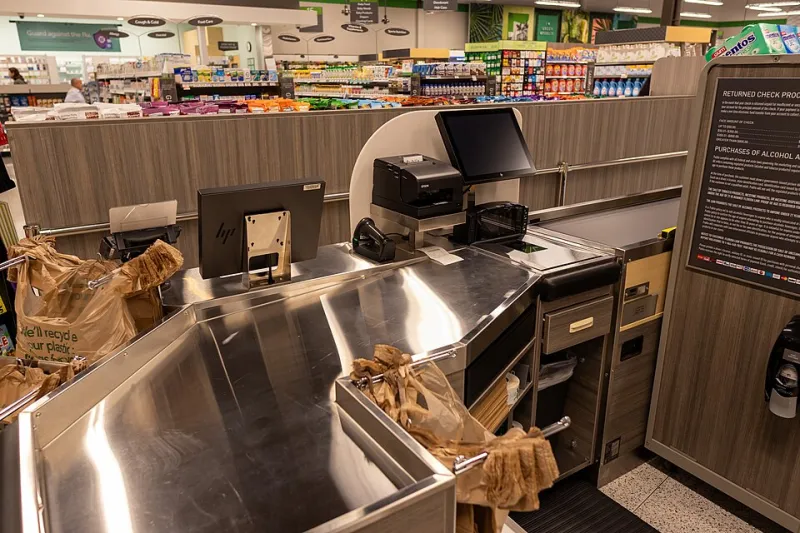
Photo: Nielsoncaetanosalmeron, CC BY 4.0, via Wikimedia Commons
There is a particular smell to a supermarket card aisle. Warm plastic, slightly dusty cardboard, the ghost of a thousand trolley handles. It is not romantic. Nobody has ever posted a photo of a Sainsbury's blister pack on the timeline with the caption "the chase begins." And yet, if you want to understand what a trading card actually costs — what it's really worth paying for — the till-side pegboard is one of the most honest teachers in Britain.
Let me make the case properly.
The price is the price, and that's the whole point
Walk into a decent independent shop and there's a small ritual to buying a pack. The dealer asks what you're after. You say something vague. They reach under the counter. You both know a price is about to be suggested and you both know it might move a pound or two depending on how the conversation goes. That's fine — it's part of the fun, and I've written before about haggling without being a menace.
But the supermarket doesn't do any of that. The blister pack at the till has a sticker on it. Four ninety-nine. Five ninety-nine at a push. There is no dealer, no dance, no "I can do you a deal on three." There's a barcode and a self-scanner and a robotic voice telling you to place the item in the bagging area.
That flatness is the point. For a new collector, or for anyone who's ever walked out of a shop feeling slightly fleeced, the supermarket offers something rare: a card transaction with no social pressure whatsoever. You are not being upsold. You are not being judged for buying one pack rather than a booster box. You are just a person buying a thing.
What's actually in the pack (and what isn't)
Here's where honesty cuts both ways. Supermarket blisters are rarely the newest set. They're often a few months behind, sometimes a year, and the pack inside is usually a single booster with a promotional card taped to the front for bulk. That promo is the entire reason the thing exists as a supermarket product — it's a repackaging job, not a retail exclusive in any meaningful sense.
So judge it on three things before your fiver leaves your hand:
The promo card. Is it a card you'd actually want in a binder? Some supermarket promos are genuinely nice. Others are the sort of thing that ends up in a shoebox with the broken dice. If you're buying for the promo, look it up on your phone in the aisle — nobody's watching, and the queue will survive thirty seconds of research.
The set. Older packs mean less demand for the singles inside, which means a lower chance of pulling something you can trade or sell on. That's not automatically bad. If you're building an older set anyway, a stale supermarket blister can be a quiet bargain.
The wrap. Check the seal along the top and bottom. Blisters live on pegs in warm shops for months; the plastic fatigues. A pack that's been squeezed, sun-bleached or has a suspicious puncture goes back on the peg. This is the same discipline as reading a sealed pack anywhere else, just applied to a product that's had a harder life than most.
When the supermarket actually beats the shop trip
The maths is simpler than people make it. A trip to a specialist shop usually costs you the train fare, the parking, or at minimum an hour of your Saturday. If you're buying one pack, the supermarket wins by default — it's a two-minute detour on a shop you were doing anyway.
Where it really shines is the low-stakes gift. A fiver blister is a perfect present for a kid's friend's birthday, a stocking filler, a pick-me-up for someone having a rubbish week. Specialist shops are wonderful but they are not always convenient, and convenience has genuine value when the alternative is driving forty minutes for one pack.
And there's the sideways benefit: the till-side pack is often the first card a person ever opens. That has real worth. Somebody's whole collection starts because a parent grabbed a blister while buying milk. Snobbery about that is misplaced.
Where the habit turns into a leak
Here's the bit nobody wants to hear. The supermarket pack is cheap enough that it doesn't feel like spending. You buy one on Tuesday, another on Thursday because you're in for bread, a third on Saturday because the shelf looked emptier and you panicked. By the end of the month you've spent forty quid on packs you don't remember opening and pulled nothing you'd keep.
That's the trap. Fixed pricing cuts both ways — it removes the pressure, but it also removes the friction that makes you think.
A few things that work:
- Set a monthly till-side cap and treat it as spent the moment it's spent. Ten or fifteen pounds is plenty for most people. When it's gone, walk past the peg.
- Photograph what you pull before you bin the wrapper. If you can't remember what was in a pack three weeks later, you probably didn't need it.
- Don't buy multiples on the same day. Supermarket stock is often a single case, which means the same short-print distribution as everything else. Three packs off the same peg is not three independent chances; it's one very expensive chance repeated.
- Keep the promos somewhere deliberate. A small pile in a proper sleeve feels like a collection. A drawer of loose cards feels like clutter, and clutter is how people talk themselves out of the hobby entirely.
The honest verdict
The supermarket blister won't give you the buzz of a dealer table on a Sunday morning, and it won't give you the newest set on launch day. What it gives you is a clean, fair, pressure-free transaction in a hobby that increasingly asks you to queue, allocate and commit weeks in advance.
Treat it as a fiver's worth of fun rather than a route to a chase card, and it'll never let you down. Treat it as a weekly habit with no ceiling, and it'll quietly drain you while you're not looking.
Buy one, open it in the car, and enjoy it for exactly what it is. That's the whole trick.