The Two-Station Rule: When a Train Ticket Beats Your Local Shop Price
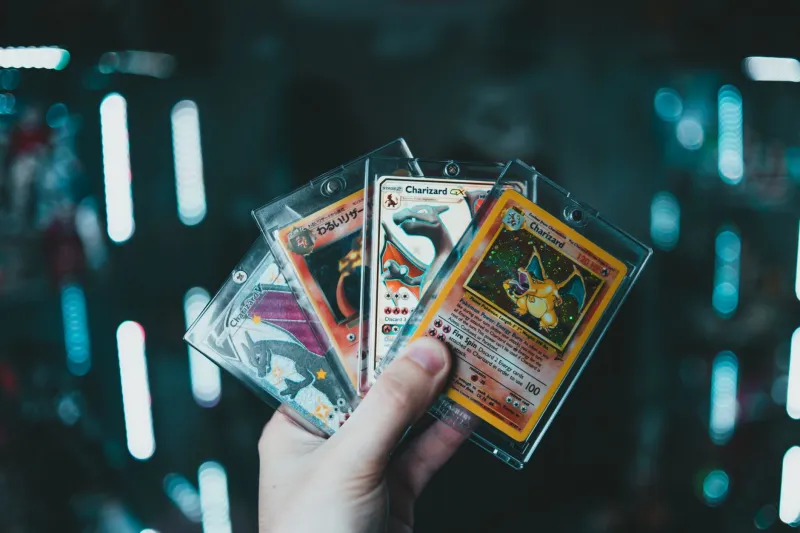
You spot the card online at £18 delivered. Your local shop has it at £26. A place two stops down the line lists it at £21. Suddenly you are doing maths on a Tuesday evening and wondering whether the local shop is having a laugh or whether you are missing something. Welcome to the postcode premium: the very British fact that the same Pokémon, Magic or sports-card single can cost different amounts in different towns, sometimes only a few miles apart.
Why the same card wears different price tags
A shop's sticker price is not just the card. It is the rent, the business rates, the staff, the heating, the insurance and the fact that the owner has to guess what local collectors will actually buy. A London shop with footfall and tourist traffic can charge more because someone on holiday will pay for the convenience. A quiet shop in a market town may have lower overheads, but it may also have less stock and a smaller pool of buyers, so it prices to hold rather than to shift.
Then there is local demand. A town with a busy league night can support stronger prices on Standard staples. A seaside town might see a summer bump when visitors drift in. A shop near a school might sell more entry-level cards, while another ten minutes away caters to serious binder-fillers. Condition, language and print run matter too, but geography is the bit collectors forget. The card is the same; the postcode is not.
Judge the local price against the delivered price
The mistake is comparing a shop sticker to the cheapest asking price on an online marketplace. Asking prices are fantasy until someone pays. What you want is a delivered benchmark: a recent sold price, plus postage, plus any buyer protection, plus the small risk that the card arrives with an edge nick you did not see in the photos.
If a local shop is within a few pounds of that delivered benchmark, it is probably fair. For a card under £50, a £3 to £5 local premium buys you something real: you can inspect the card in your hand, check the holo under the shop lights, ask about returns and walk out with it today. For a £200 card, the same percentage premium is a much bigger number, so the convenience argument has to work harder. The point is not to defend every price. It is to compare like with like.
The two-station rule
Before you buy a train ticket, write a short list. Three to five cards you actually want, not cards you might want after seeing them in a case. Price them at your local shop, at the shop down the line and against your delivered benchmark. Then add the return fare.
The rule is simple: if the total saving at the other shop is at least twice your return fare, the trip is worth considering. If the saving only covers the fare, you are working for free. A £6 return ticket and a £15 saving is a decent afternoon out. A £6 return ticket and a £7 saving is a hobby pretending to be a job.
There is also a temptation tax. Card shops are designed to catch you at the till: sleeves, a couple of packs, a snack, maybe a trade binder you did not know you needed. A short train journey can easily turn a £15 saving into a £20 spend. Call ahead if you can. Ask whether the card is still in the case and whether they will hold it for an hour. Most shops would rather have a definite sale than a maybe.
When the local premium is worth paying
A nearby shop earns its premium when it saves you hassle. It lets you check centring and surface before you pay. It gives you somewhere to take a damaged card back to. It runs the league night where you actually trade. It remembers what you collect. That is not sentimental fluff; it is part of what you are buying.
A practical way to handle this without spreadsheets is to set a local premium envelope. Maybe it is £5 a month, or one purchase a month at up to 10 per cent over the delivered benchmark. Once it is spent, you go back to pure price comparison. That keeps you honest without turning every purchase into an audit. It also means you can support the shop on a normal Saturday without feeling like you have to justify every pound.
Support the shop without making it a maths project
You do not have to buy every card locally to keep a local shop alive. Buy your sleeves and top loaders there. Pay for a league night. Buy a pack when you are browsing. Tell the owner what you are hunting, so they can message you when it comes in. If a price is miles off, say thanks and walk; you do not need a lecture or a dramatic exit. If it is close, take the convenience and enjoy the fact that you can hold the card before you commit.
In 2026, with postage costs doing what postage costs do, the gap between a fair local price and a delivered online price is often smaller than it looks. The postcode premium is real, but it is not always a scandal. Sometimes it is a train fare, a tourist, a rent bill or a shop owner taking a punt on local demand. Use the delivered benchmark. Use the two-station rule. Give yourself a small local premium envelope. Then get back to the bit that actually matters: the thrill of the chase, not the admin of it.