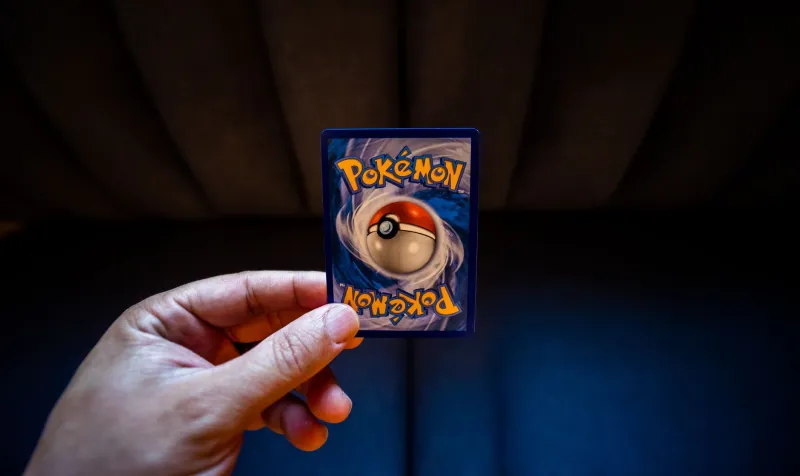
Blacklight Basics: The Cheap Fair-Day Check That Keeps Your Wallet Honest
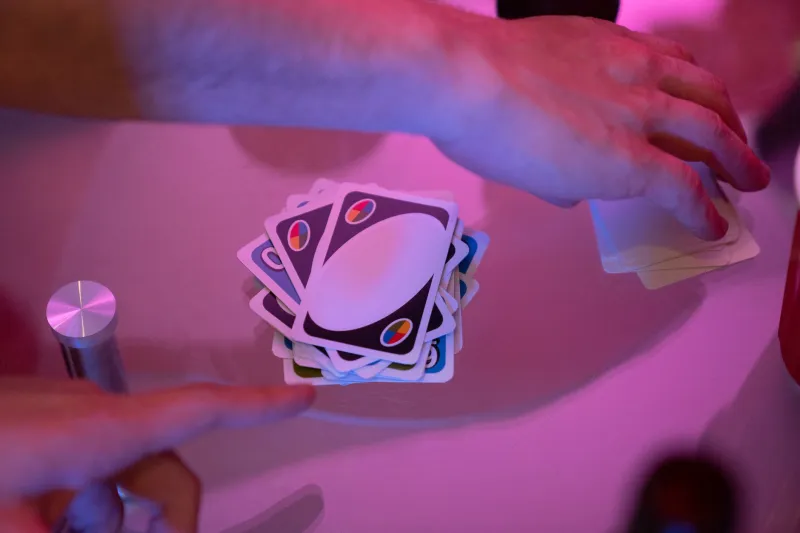
At a church-hall card fair in Britain, the lighting is usually a choice between gloomy and slightly too bright. Holos flare, sleeves catch the glare, and every stall seems to have one card you half-recognise and fully want. This is exactly when a small UV torch earns its keep. Not as a detective's badge, and not as a reason to lecture anyone, but as a cheap way to add a pause between seeing and buying.
Why a UV torch belongs in the bag
UV torches are not magic. They do not read a card's soul, certify its history, or tell you whether the seller is a rogue. What they do is show you how different materials react under a type of light your eyes are not built to see. Paper, inks, coatings and adhesives can all behave differently. That can sometimes flag a reprinted back, a washed-out foil, a proxy sticker, or old tape residue around a border. It can also flag absolutely nothing, which is why the torch is a prompt rather than a verdict.
The useful sort is a 365nm UV torch, not the purple-glow keyring jobs that are mostly visible light with a fancy label. In 2026 you can pick up a small 365nm torch for roughly £8–£15 online or from a hardware shop. That is budget-collecting money: less than a mid-range single, less than a bad impulse buy, and small enough to live in your bag next to your penny sleeves.
The fair-day routine
Do the boring check first. Look at the card in normal light. Check the edges, corners, surface and centring. Tilt it. See how the foil behaves. If the card is in a sleeve, ask before you take it out. A torch is not a substitute for your eyes; it is a second opinion.
Then ask. A simple 'Do you mind if I shine a UV torch over this?' is enough. Most dealers will say yes. Some will produce their own torch before you have finished the sentence. If they say no, accept it and move on. You can still buy with your eyes or walk away.
Keep the beam low and angled, about 10–15cm from the card, and sweep once or twice. Do not hold it on one spot. Watch for patchy fluorescence, a back that glows unevenly, a foil pattern that looks painted on rather than part of the card, or a border that lights up like someone has been at it with adhesive. If you have a known card from the same era in your binder, compare the two. A lot of this game is just contrast.
Check the sleeve before you blame the card. Many penny sleeves and top loaders fluoresce blue under UV. So do some binders, playmats and even bits of carpet. If the whole card is sitting in a glowing plastic envelope, you have learned something about the sleeve, not the card. For a serious look, ask the dealer if you can view it out of the sleeve. If the answer is no, that is information too.
Then put the torch away and look again under normal light. If the card still feels wrong, leave it. If it looks fine, do not talk yourself into a problem just because the torch made you feel important.
What it can and cannot tell you
UV can be genuinely useful for spotting certain adhesives, tape residue, some surface coatings and the odd suspicious reprint. It can make a bad foil look worse and a clean card look normal. It cannot tell you whether a card has been trimmed, whether the centring is factory or hopeful, or whether a very good fake is a fake. It will not grade your card and it will not settle a provenance argument. It is one more clue, not a certificate.
Modern paper can contain brightening agents. Some inks and coatings react unpredictably. A clean UV pass is not proof of authenticity, and a strange glow is not proof of fraud. The torch is best used to decide whether to ask more questions, not to deliver a verdict from the edge of a folding table.
Fair etiquette: curiosity, not accusation
This is the bit that matters. A UV torch can make a collector feel like a customs officer, and nobody wants that at a Saturday fair. Ask permission. Keep your voice down. Do not shine the beam in anyone's eyes. Do not block the table while you conduct a five-minute investigation. Do not announce 'fake' across the room. If you are suspicious, say 'I'll leave it, thanks' and move on. There is no prize for catching someone out in public.
Dealers are people trying to make a living, and most of them know their stock better than you know their stock. Treat the torch as a quiet question, not an accusation. At a busy fair, keep it quick. A torch is a pause button, not a performance.
A fiver's worth of kit
You do not need much. A small 365nm torch, a known comparison card in a penny sleeve, and maybe a spare battery. Keep it in your pocket. Do not clean a card with your sleeve. Do not wipe it. Do not press the torch against the surface. Use it, thank the dealer, and move on.
The thrill of the chase is supposed to be fun. A cheap UV torch does not remove the risk from buying at a UK card fair, and it should not remove the manners either. It just buys you a moment to look twice. For a tenner, that is a pretty good deal.